
预报如何运作
DiveSight 为每个潜点提供两项前瞻性预报:海洋生物可能有多活跃,以及能见度可能如何。下面用通俗的话说明其背后的思路。
我们预报的是相对常态的差异
任何 app 都能告诉你热带珊瑚礁在夏季通常清澈,或某个知名潜点通常鱼群密布。那只是季节平均值,一般的潜水指南和预报往往只能反映这些基本水平,而这并不需要真正的预测。
真正帮助你决定何地、何时下潜的,是知道某个具体地点在某个具体的一周里何时会偏离它自身的常态:比平常更清澈还是更浑浊,生物更活跃热闹还是更冷清。这种差异正是 DiveSight 所要预测的。每一项预报都锚定于那个确切潜点在一年中那个时节的常态,然后告诉你即将到来的窗口正朝哪个方向倾斜。
它读取的是近期状况,而不只是日历
季节平均值只知道日期,比如“这片海域在夏季往往风平浪静、能见度更好”这样的说法。DiveSight 纳入了这些季节性信号,但同时也引入了大量在每天乃至每小时都会变化的环境信号,例如不同深度的水体状态,以及在你下潜前几天塑造这些水体的天气。状况往往具有惯性。几天前在数百英里之外的一场风暴,今天可能仍在搅动某个潜点;而一段平稳的天气则能让水体平静下来、把生物吸引过来。读懂这段近期历史,正是预报区别于平均值之处。
两项预报,各自锚定于潜点
DiveSight 提供两项潜水员最为关心的预报。

海洋生物活跃度
鱼类及其他生物相对该潜点和季节的典型水平,可能更活跃还是更不活跃。

能见度
相对于该潜点通常所能提供的水平,水下能见度可能会如何。
两者都是相对该潜点自身的基准来解读的,所以“比这里平常更好”就是字面上的意思,针对的正是那个地点。这两项预报受不同的作用力影响。下面说明各自由什么决定,以及原因。
是什么塑造了能见度
水下能见度归根结底取决于光如何与悬浮在你和你想看的东西之间的水中物质相互作用。微小的颗粒——主要是漂浮的浮游生物、被搅起的沉积物和有机物——会散射并吸收光,因此水中这类物质越多,你能看到的距离就越近。许多作用力决定着在任一时刻有多少物质悬浮其中,以及它们清除得有多快。
Light
How far you can see depends on how much light is available. Overcast skies, a low sun, and early or late dives all cut visibility even when the water itself is clear.
深度
The surface layer is generally the noisiest, with glint, chop, and runoff sitting on top, while deeper water tends to be more settled. Visibility near the surface and visibility at depth can be quite different on the same dive.
Waves, swell, and storms
Wave energy lifts sediment off the bottom and mixes the water column. A storm several days earlier can still be clouding a site today, and shallow, sandy sites feel it most.
Currents and tides
Moving water can flush a site clean by drawing in clear oceanic water, or drag in murkier water from elsewhere. At many sites the tide is the difference between a clear and a cloudy dive, depending on whether it is pulling ocean water in or estuary water out.
风
Sustained wind builds chop and waves, stirs the surface, and can push cloudy surface water across a site.
Plankton
The same blooms that feed marine life also cut clarity. Rich, productive water is often greener and shorter on visibility, which is why the clearest water and the most life do not always line up.
Runoff after rain
Rivers, and even small coastal creeks, carry sediment and nutrients to the sea after heavy rain, and the resulting plume can cloud nearshore water for days. A clear site can turn murky well after the rain has stopped.
Local geography
The shape of a site decides how much of all this actually reaches it. A sheltered cove, a deep wall, or a reef that blocks the swell can hold visibility when exposed sites nearby blow out, while a shallow, sandy bottom near a river mouth muddies easily and clears slowly. Two sites a short distance apart can dive completely differently because of how each sits relative to land, depth, and the open ocean.
这正是 DiveSight 为之而生的那类问题:它的模型从多年的卫星和海洋数据中学习这些作用力在每一个具体潜点上如何相互作用,并把它们审慎地综合成一份预报。通过结合逐日、逐小时级别的高分辨率卫星数据,来理解诸如此类的状况与每个潜点通常所能提供的相比如何,预报反映的是每一个具体地点,而非一个笼统的平均值。
是什么塑造了海洋生物
海洋生物的丰度和活跃度同样受众多因素驱动,而其中微小的变化就可能让一次下潜从冷清变得热闹。不过,这些作用力没有一个是单独起作用的。它们彼此叠加、相互强化,有时又相互抵消,而动物也并不总是循规蹈矩。正是这种相互作用,让海洋生物真正难以预测,也是我们把它当作预报而非承诺的原因。
Light and the daily clock
Most reef predators hunt hardest at dawn and dusk, when low light favors the hunter over the hunted. Midday sun with strong light sends many reef fish to shelter, while nocturnal hunters wait for dark. The time of day you drop in shapes what you are likely to see.
潮汐
Tidal flow opens and closes feeding windows. Ambush hunters such as groupers and moray eels, and the reef predators that work the flow, time their activity to the water that sweeps prey past them. The same site can switch from sleepy to active as the tide turns.
Food at the base of the web
When the water turns productive and plankton multiply, the effect ripples upward. Drifting plankton pull in filter feeders and baitfish, and the baitfish pull in predators. Productive spells are often the busiest diving, even when the water is a little greener for it and visibility is lessened.
温度
Every species has a comfort range. A shift of a couple of degrees can move fish into or out of an area, trigger spawning, or change how actively animals feed. Warm pushes and cold upwellings reshuffle who is around.
海流
Moving water delivers food and oxygen and sets up the gathering points divers seek out. Many big-animal encounters happen where a current meets structure, a wall or a point, where sharks, jacks, and other open-water hunters hold and feed. Slack water and running current can sometimes feel like different dives.
The structure of the water column
Where warm surface water meets cooler water below, plankton and the animals that feed on it concentrate along that boundary, and predators patrol the edge. It is one reason life often stacks up at particular depths rather than spreading evenly.
Local geography
Structure concentrates life. Walls, pinnacles, drop-offs, and healthy reef give animals places to shelter, hunt, and gather, so a current-swept point can teem while open sand nearby stays quiet. Sites near deep water or upwelling tend to see more big animals, and the more complex the terrain, the more there is to find.
季节告诉你某个潜点大致有什么可能、或一般会有什么。洄游、聚集和产卵事件往往遵循太阳历或月相周期。但真正告诉你当前这一周实际表现如何的,是这些逐日的状况,以及它们相互作用的方式。
我们以现实为检验标准,而不是自说自话
模型只要重复它学到的平均值,就很容易显得表现不错。我们采用了一个严格得多的基准,衡量的是更难的东西:预报在某个地点上比季节平均值好了多少。胜过平均值,正是让一项预报值得拥有的地方;那个差距才是关键所在。季节平均值告诉你某个潜点在一年中这个时节通常是什么样子(这也是我们同样把这些数据提供给你的原因);而预报告诉你即将到来的这一周相对于此实际将如何发展,而这正是能帮你判断现在值得去、还是该再等等的那一部分。
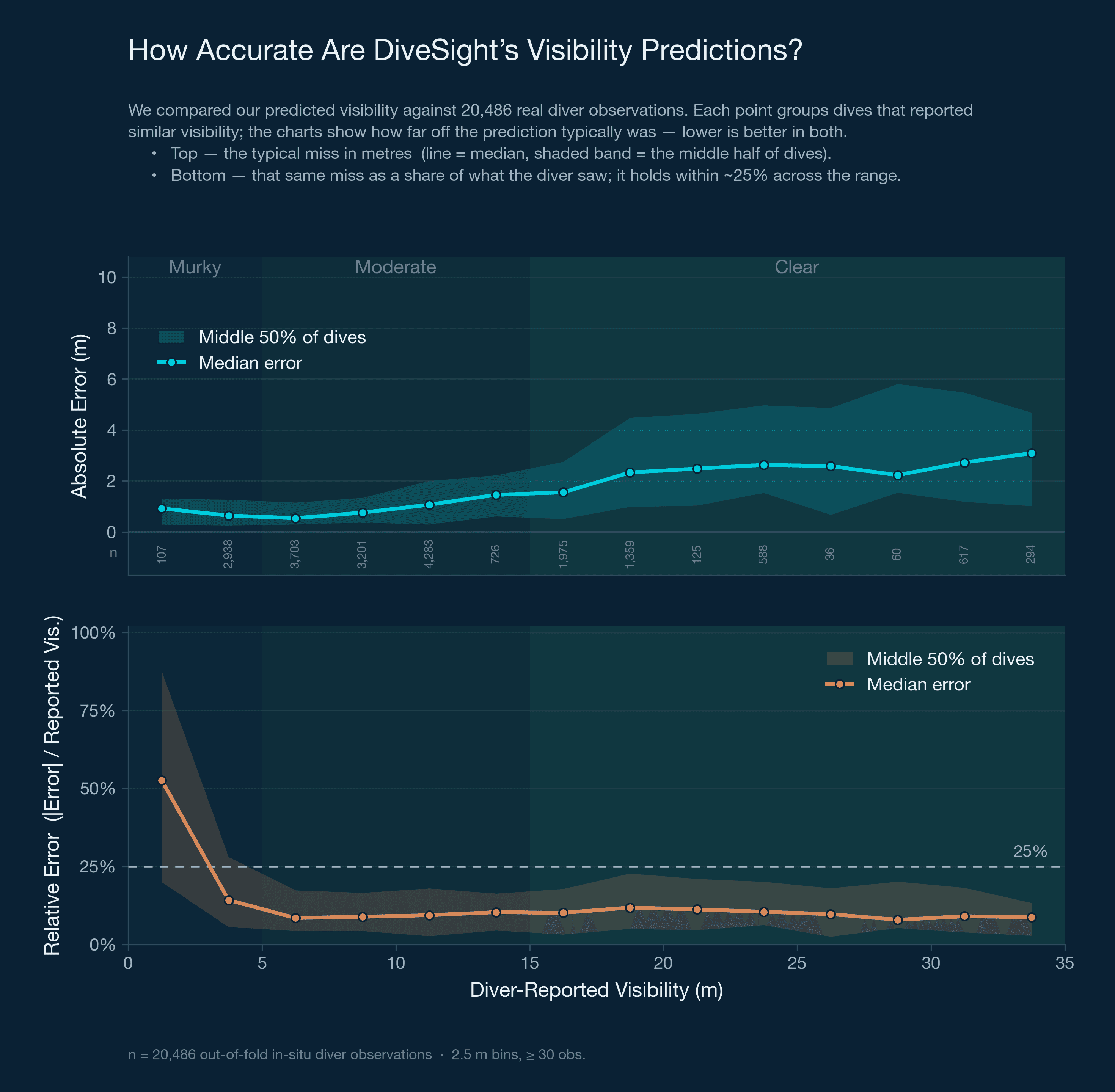
我们怎么知道自己的预报有多准?我们只用真实观测数据来给模型打分,这些数据由受过训练的人类潜水员采集,且在模型构建过程中从未被模型见过。这提供了一种严谨的方式,来了解我们的预报在模型此前没有见过数据的新日子里会有多准——也就是你本周想去潜水的那些日子。
“高于典型”判断中被证明正确的比例,仅以受过训练的潜水员提供、且模型在训练中从未见过的留出观测数据来评分。
能见度准确率
我们认为,理解我们预报价值的最直观方式,就是回答下面这个问题:当预报说某个潜点的状况优于典型时,有多大比例的时候它是对的?这个数字告诉你,对于某一天的能见度会优于常态,你能有多大把握。
就能见度而言,这个数字平均为 85%。换句话说,如果预报说某个潜点的能见度会优于平均,那么它的能见度确实更好的概率就是 85%。有一点值得记住:如果能见度预报说“极佳”(最高类别),那么它特别清澈的可能性 更大 ,甚至会高于 85%。而如果只是“良好”——比“平均”高一档——那么这条预报准确的可能性会 略低 ,但仍应有接近十分之八的概率是正确的。造成这一差异的原因在于:对任何模型来说,识别相对基准的较小变化都比识别较大变化更难(这是统计检验的一个普遍特性)。正是这种倾向,让我们认为从预报相对于典型值的总体方向来理解更为直观:它能提供一幅关于情况大体会有多好的、有价值的整体图景。
海洋生物准确率
海洋生物丰度预报大体相当,但准确度略低(活的生物比海水中的悬浮颗粒更难预测!)。不过即便如此,我们的模型依然表现出色。
当预报说某个潜点会优于平均时,模型有 75% 的时候是对的。如果它明确告诉你某天“极佳”,那么海洋生物应当明显丰富(前提是你了解那里平常是什么样)的概率为 80%。如果它告诉你某天“较差”(同样是相对该潜点的季节常态而言),这个数字将有 87% 的时候是对的。(鱼群离开恶劣状况,比在绝佳状况中出现要更可靠。)
两项预报都带来了超越历史平均值、或某地某季常识的真实且可衡量的价值。能见度预报与全球数千个潜点上潜水员的实际报告高度吻合。而当海洋生物预报把某个潜点标记为异常好或异常差时,实际下潜大约有八成落在预测的那一侧,远高于凭猜测的对半概率。
预报是一种趋势,而非承诺
海洋复杂得妙趣横生,任何一次下潜都可能让你(或模型)大吃一惊。DiveSight 告诉你某个潜点在某一周里概率更偏向哪一边,而不是一定会发生什么,我们也特意用这样的措辞来表述预报。而当状况指向一个异常好或异常差的窗口时,那就是一个特别值得围绕其安排计划的信号。
携手让我们的预报更上一层楼
每一项预报都要对照潜水员在水中实际看到的情况来检验,因此记录你的潜水是让预报变得更准的最好方式,尤其是当你记下能见度和你看到的海洋生物时。DiveSight 的潜水日志功能让你各只需点一下,就能录入能见度和海洋生物。我们特意把这个过程做得尽可能简单快捷,因为这些是来自真实下潜的真实实况数据,与模型学习的数据同属一类,而且它们在你反复前往的潜点处对预报的提升最大。而且记录所见的潜水员越多,对所有人就越有益。我们的使命是让这些模型尽可能准确,直至海洋动力学所允许的极限。你的潜水日志是加速实现这一目标的一个非常重要的途径。
你记录海洋生物的努力还一举两得:如果你把 DiveSight 账户与 iNaturalist 账户关联,你记录的每一条带照片的物种观测,一经核实便会自动进入全球生物多样性记录。你的潜水日志不再只是存放回忆的方式,更成为为海洋科学与保育做贡献的途径。