
預報如何運作
DiveSight 為每個潛點提供兩種前瞻性的預報:海洋生物可能有多活躍,以及能見度可能如何。以下用淺白的方式說明背後的思路。
我們預報的是與常態之間的差異
任何 app 都能告訴你,熱帶珊瑚礁在夏季通常清澈,或某個知名潛點通常魚群密布。那只是季節平均值,一般的潛水指南與預報往往只掌握到這些基本水準,而這並不需要真正的預測。
真正能幫助你決定該在何處、何時潛水的部分,是知道某個特定地點在某個特定週次,何時會與它自身的常態有所不同:比平常更清澈或更混濁、生物更熱鬧或更冷清。那份差異,正是 DiveSight 打造出來要預測的東西。每一則預報都錨定於該潛點在一年中那個時節的常態,然後告訴你接下來的時間窗口正偏向哪一邊。
它解讀的是近期的狀況,而不只是看日曆
季節平均值只知道日期,例如「這片海域在夏季月份通常風平浪靜、能見度較佳」這樣的說法。DiveSight 納入這些季節訊號,但同時也吸收大量以日或小時為單位變動的環境訊號,例如不同深度的水體狀態,以及在你下水前幾天塑造這些水體的天氣。狀況往往具有延續性。幾天前、數百英里外的一場風暴,今天仍可能攪動著某個潛點;而一段平穩的時期則能讓水變得平靜、並吸引生物聚集。解讀這段近期的變化歷程,正是預報與平均值之間的差別所在。
兩種預報,各自錨定於該潛點
DiveSight 提供兩種潛水員最關心的預報。

海洋生物活動
魚類與其他生物相對於該潛點與季節的常態,可能更活躍還是較不活躍。

能見度
水下能見度相對於該潛點平常所提供的,可能會是如何。
兩者都是對照該潛點自身的基準來解讀,因此「比這裡平常更好」所指的正是如此,是針對那個地點而言。這兩種預報受不同的力量左右。以下說明各自由什麼塑造,以及原因。
塑造能見度的因素
水下能見度最終取決於光線如何與懸浮在你和你想看的東西之間水中的物質互動。微小的顆粒——大多是漂浮的浮游生物、被攪起的沉積物與有機物質——會散射並吸收光線,因此水中這類物質越多,你能看到的距離就越短。有許多力量決定了任一時刻有多少物質懸浮其中,以及它清除的速度有多快。
Light
How far you can see depends on how much light is available. Overcast skies, a low sun, and early or late dives all cut visibility even when the water itself is clear.
深度
The surface layer is generally the noisiest, with glint, chop, and runoff sitting on top, while deeper water tends to be more settled. Visibility near the surface and visibility at depth can be quite different on the same dive.
Waves, swell, and storms
Wave energy lifts sediment off the bottom and mixes the water column. A storm several days earlier can still be clouding a site today, and shallow, sandy sites feel it most.
Currents and tides
Moving water can flush a site clean by drawing in clear oceanic water, or drag in murkier water from elsewhere. At many sites the tide is the difference between a clear and a cloudy dive, depending on whether it is pulling ocean water in or estuary water out.
風
Sustained wind builds chop and waves, stirs the surface, and can push cloudy surface water across a site.
Plankton
The same blooms that feed marine life also cut clarity. Rich, productive water is often greener and shorter on visibility, which is why the clearest water and the most life do not always line up.
Runoff after rain
Rivers, and even small coastal creeks, carry sediment and nutrients to the sea after heavy rain, and the resulting plume can cloud nearshore water for days. A clear site can turn murky well after the rain has stopped.
Local geography
The shape of a site decides how much of all this actually reaches it. A sheltered cove, a deep wall, or a reef that blocks the swell can hold visibility when exposed sites nearby blow out, while a shallow, sandy bottom near a river mouth muddies easily and clears slowly. Two sites a short distance apart can dive completely differently because of how each sits relative to land, depth, and the open ocean.
這正是 DiveSight 為之而生的那類問題:它的模型從多年的衛星與海洋資料中,學習這些力量在每一個潛點各自如何交互作用,並小心地將它們權衡整合成單一的預報。透過結合日與小時尺度的高解析度衛星資料,來了解像這樣的狀況與每個潛點平常所提供的相比如何,預報所反映的是每一個特定地點,而非籠統的平均值。
塑造海洋生物的因素
海洋生物的豐度與活動同樣受許多因素驅動,而這些因素的微小變化,就可能讓一次潛水從平淡變得精彩。不過,沒有任何一股力量是單獨作用的。它們彼此重疊、相互強化,有時又互相抵消,而且動物並不總是照規則走。正是這種交互作用,讓海洋生物真正難以預測,也是我們把它視為預報、而非承諾的原因。
Light and the daily clock
Most reef predators hunt hardest at dawn and dusk, when low light favors the hunter over the hunted. Midday sun with strong light sends many reef fish to shelter, while nocturnal hunters wait for dark. The time of day you drop in shapes what you are likely to see.
潮汐
Tidal flow opens and closes feeding windows. Ambush hunters such as groupers and moray eels, and the reef predators that work the flow, time their activity to the water that sweeps prey past them. The same site can switch from sleepy to active as the tide turns.
Food at the base of the web
When the water turns productive and plankton multiply, the effect ripples upward. Drifting plankton pull in filter feeders and baitfish, and the baitfish pull in predators. Productive spells are often the busiest diving, even when the water is a little greener for it and visibility is lessened.
溫度
Every species has a comfort range. A shift of a couple of degrees can move fish into or out of an area, trigger spawning, or change how actively animals feed. Warm pushes and cold upwellings reshuffle who is around.
海流
Moving water delivers food and oxygen and sets up the gathering points divers seek out. Many big-animal encounters happen where a current meets structure, a wall or a point, where sharks, jacks, and other open-water hunters hold and feed. Slack water and running current can sometimes feel like different dives.
The structure of the water column
Where warm surface water meets cooler water below, plankton and the animals that feed on it concentrate along that boundary, and predators patrol the edge. It is one reason life often stacks up at particular depths rather than spreading evenly.
Local geography
Structure concentrates life. Walls, pinnacles, drop-offs, and healthy reef give animals places to shelter, hunt, and gather, so a current-swept point can teem while open sand nearby stays quiet. Sites near deep water or upwelling tend to see more big animals, and the more complex the terrain, the more there is to find.
季節告訴你某個潛點大致有哪些可能、或一般可以期待什麼。洄游、聚集與產卵事件往往依循陽曆或月相週期。但真正告訴你當前這一週實際相比如何的,是這些每日變動的狀況,以及它們彼此交互作用的方式。
我們以真實世界來檢驗,而不是自我檢驗
模型只要重複它學到的平均值,就很容易顯得表現不錯。我們採用了嚴格得多的基準,衡量一件更困難的事:預報相對於某地的季節平均值究竟勝出多少。勝過平均值正是讓一則預報值得擁有的關鍵;那段差距才是重點所在。季節平均值告訴你某個潛點在一年中的這個時節通常是什麼樣子(這也是為什麼我們一併把這些資料提供給你);而預報則告訴你接下來這一週相對於那個平均,實際上正如何發展,而這正是能讓你判斷現在值不值得前往、或是該再等等的部分。
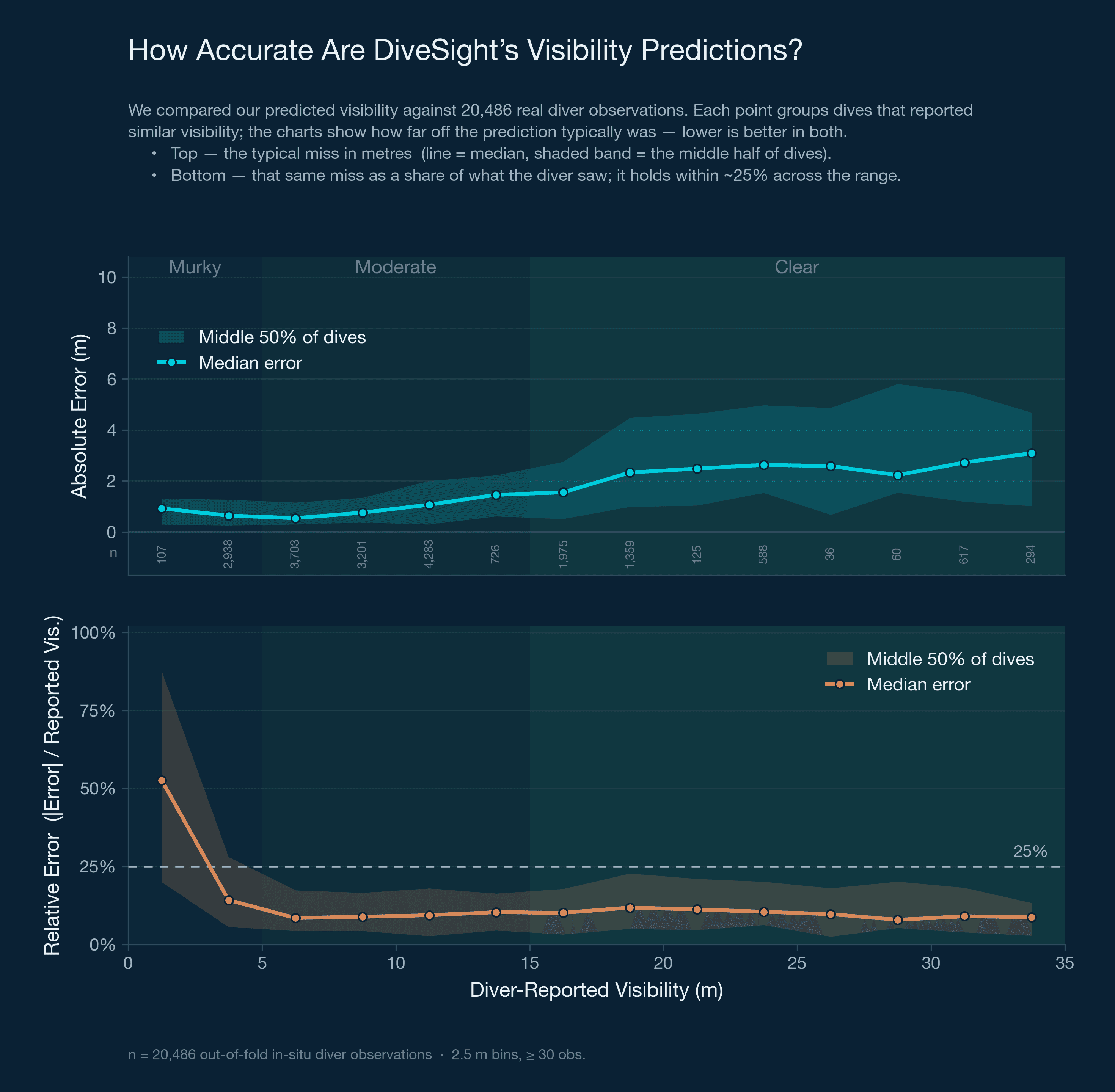
我們怎麼知道自己的預報有多好?我們只用真實的觀測資料來為模型評分,這些資料由受過訓練的人類潛水員蒐集,而且模型在建構過程中從未見過。這提供了一種嚴謹的方式,讓我們知道在模型過去未曾取得資料的新日子裡,我們的預報會有多準確——也就是你這週想去潛水的那些日子。
高於平常的判斷中最終證實正確的比例,僅以受過訓練的潛水員所提供、模型在訓練中從未見過的保留觀測資料來評分。
能見度準確度
我們認為,要理解我們預報的價值,最直觀的方式就是回答以下這個問題:當預報說某個潛點的狀況優於平常時,有多少比例的時候是正確的?這個數字告訴你,在某一天能見度會優於常態這件事上,你可以有多少把握。
就能見度而言,這個數字平均為 85%。換句話說,如果預報說某個潛點的能見度會優於平均,那麼能見度實際上更好的機率就有 85%。有一件事值得記住:如果能見度預報說「極佳」(最高的等級),那麼它 更 有可能超過 85% 特別清澈。而如果只是「良好」——僅比「平均」高一階——那麼這則預報就稍微 較不 有可能是準確的,但仍應有將近十次中八次是正確的。之所以會有這個差異,是因為對任何模型而言,要辨識出相對於基準的較小變化,都比辨識較大的變化更困難(這是統計檢定的一個普遍特性)。這也是為什麼我們認為,用預報相對於「平常」的整體方向來思考會更直觀:它能提供一幅寶貴的整體圖像,讓你了解情況大致有多好。
海洋生物準確度
海洋生物豐度預報的水準大致相當,但準確度略低一些(活生生的生物比海中的懸浮微粒更難預測!)。不過即便在這方面,我們的模型仍有亮眼的表現。
當預報說某個潛點會優於平均時,模型有 75% 的時候是正確的。如果它明確告訴你某天「極佳」,那麼海洋生物應該會明顯豐富(前提是你知道那裡的常態是什麼樣子),其正確率為 80%。如果它告訴你某天「差」(同樣是相對於該潛點的季節常態而言),那個數字會有 87% 的時候是正確的。(魚類因惡劣狀況而離去的可靠程度,高於牠們在絕佳狀況中出現的可靠程度。)
這兩種預報都提供了超越歷史平均值、也超越「某地在某季節大致如何」這類常識的真實、可衡量的價值。能見度預報與全球數千個潛點上潛水員實際回報的情況高度吻合。而當海洋生物預報把某個潛點標記為異常好或異常差時,實際潛水結果大約有十次中八次落在那一側,遠高於純粹猜測的五五機率。
預報是一種趨勢,而非承諾
海洋複雜得令人著迷,任何一次潛水都可能給你(或給模型)帶來驚喜。DiveSight 告訴你某個潛點在某一週的機率偏向哪一邊,而不是一定會發生什麼,我們也刻意用這樣的措辭來表達預報。而當狀況指向異常好或異常差的時間窗口時,那就是一個特別值得圍繞著規劃的訊號。
一起讓我們的預報變得更好——攜手同心
每一則預報都是對照潛水員在水中實際看到的情況來衡量的,因此記錄你的潛水是讓預報變得更好的最佳方式,尤其是當你記下能見度以及你看到的海洋生物時。DiveSight 的潛水日誌功能讓你各用一次點擊就能輸入能見度與海洋生物。我們刻意把這件事做得盡可能簡單快速,因為這些是來自真實潛水的真實地面實況,正是模型學習所用的同一種資料,而它們在你一再回訪的潛點上最能讓預報變得更銳利。而且越多潛水員記下自己的發現,對所有人就越有幫助。我們的使命是讓這些模型達到海洋動力學所允許的最高準確度。你的潛水日誌正是加速實現這個目標的一條非常重要的途徑。
你記錄海洋生物的努力還身兼兩職:如果你把 DiveSight 帳號與 iNaturalist 帳號連結起來,你每一筆帶有照片的物種觀測紀錄,一經驗證,就會自動進入全球生物多樣性紀錄。你的潛水日誌不再只是儲存回憶的方式,更成為貢獻海洋科學與保育的途徑。